
Ro-Ro ships are suitable for transporting a wide variety of cargoes, with the core advantage lying in their "wheeled" or "rolling" loading and unloading logic. With multiple decks, stern ramps, and adjustable ramps, Ro-Ro ships allow cargo to enter and exit the hold "self-driving or being towed," eliminating the need for heavy-duty port cranes and achieving highly efficient loading and unloading at the thousand-ton-per-hour level.
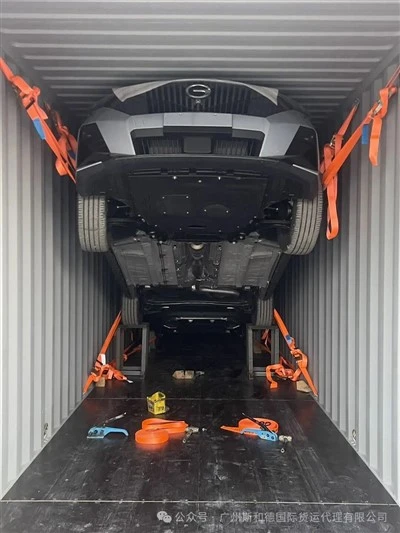
Firstly, automobiles and their derivatives are the most typical cargo type. From ordinary cars, pickup trucks, and SUVs to luxury RVs, double-decker buses, fire command vehicles, and refrigerated trucks, as long as they have their own power, they can drive directly into the hold along the 8°–12° stern ramp. New energy vehicles, because their batteries are classified as Class 9 dangerous goods, only need to be disconnected beforehand and labeled with hazard warnings; they can also be densely arranged between decks 5–13. The surge in China's new energy vehicle exports in 2024 has made 7,000-vehicle LNG dual-fuel Ro-Ro ships a new favorite among shipyards.
Secondly, construction machinery and mining equipment are another major "home turf" for Ro-Ro ships. Excavators, bulldozers, road rollers, loaders, pavers, pipe-laying machines, dump trucks, concrete pump trucks, tank trucks, and truck cranes, with a tare weight ranging from 30 to 150 tons, can all be positioned on the lower heavy-duty deck in one go. If the equipment lacks power, an external tractor unit can be connected, or MAFI roller trailers can be used for "roll-on and roll-off." Compared to bulk carriers that rely on 500-ton floating cranes, roll-on/roll-off ships save on high lifting costs and avoid damage to the equipment's appearance from rigging, which is especially crucial for high-value, time-sensitive overseas engineering projects.
Third, railway locomotives and large rail transit vehicles. With the increasing infrastructure construction along the "Belt and Road" initiative, ultra-long, ultra-high, and heavy-duty items such as diesel locomotives, electric locomotives, EMU carriages, subway modules, and rail grinding vehicles are frequently shipped overseas. Ro-Ro ships, by removing the central bulkhead and laying temporary steel bridges, allow 26-meter-long carriages to roll over entirely. The absence of transverse bulkheads within the hold provides ample lateral clearance for the extra-wide 3.7-meter bogies, saving 3-5 days of port time compared to traditional crane ships.
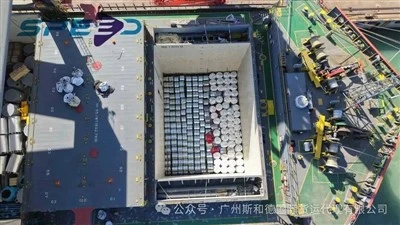
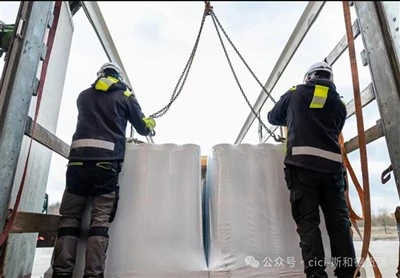
Fourth, "semi-bulk cargo" and low-value bulk items. For goods such as timber, pulp, cotton, jute, wool, steel, metal ingots, and precast concrete components-goods unsuitable for or requiring containerization-ro-Ro ships can use forklifts or pallet trucks for direct loading and unloading along the ramps, achieving door-to-door "truck-ship-truck" transport and reducing container unloading and dockside storage costs. Some Nordic pulp mills even stack their products directly on dedicated trailers, seal them at the factory, and then roll over the entire truckload. Upon arrival at the destination port, the entire truckload is towed to the printing base, without touching the ground, significantly reducing the risk of damage and moisture.
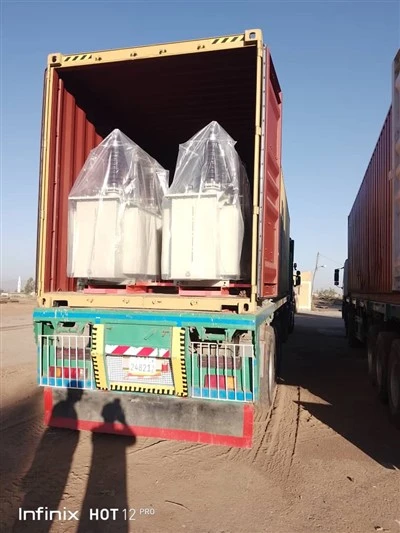
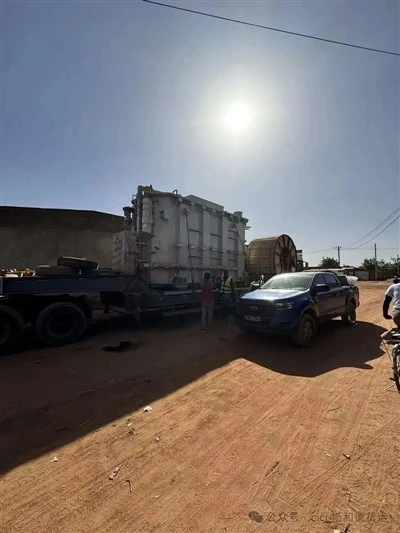
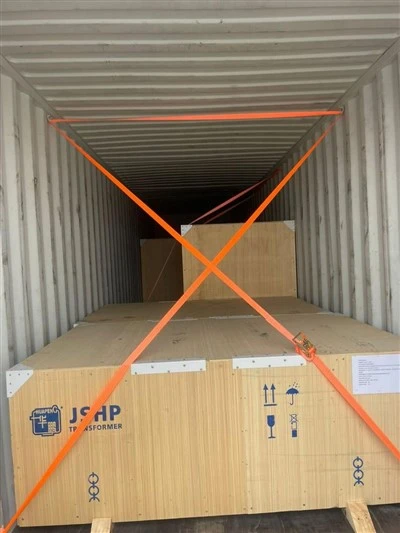
Fifth, heavy equipment and oversized industrial units. Chemical cracking furnaces, turbine generator sets, nuclear reactor pressure vessels, giant transformers, wind turbine nacelles, drilling platform modules, etc., with individual components weighing 400-600 tons and exceeding 30 meters in length, are transported by roll-on/roll-off (Ro-Ro) vessels. By widening the stern ramp, increasing deck strength (20 tons/m² in some areas), and utilizing SPMTs (Self-Propelled Modular Trailers), these massive structures can be transported as a whole. If the wharf's water level is limited, semi-submersible barges can be used for intermodal transport, achieving "Ro-Ro-Floating-Ro-Ro" transport and avoiding the reliance on 1000-ton floating cranes by traditional crane vessels.
Sixth, military and emergency equipment. Wheeled armored vehicles, self-propelled artillery, containerized ammunition, field ambulances, mobile hospitals, emergency power generation trains, etc., typically require rapid loading within 48 hours. Roll-on/roll-off (Ro-Ro) ships feature multi-layered enclosed decks and adjustable ramps to meet the tactical requirements of "self-loading and self-unloading." Meanwhile, their internal fire-fighting, sprinkler, and lashing systems can withstand Force 9 winds and 30° roll, ensuring equipment remains intact during transoceanic voyages. Therefore, they are considered a strategic transport reserve vessel type by many navies.
Seventh, MAFI-assisted non-powered components. For cargo without wheels or tracks, such as yachts, large molds, aircraft engines, precision machine tools, and sculptures, they can be "created" by being secured to MAFI roller trailers, enabling Ro-Ro operations. MAFI trailers have a built-in 30-80 t load capacity, multi-axle steering, and hydraulic suspension, allowing them to smoothly traverse 1:10 stern ramps without needing to be untied, until delivery to the consignee's workshop.
Eighth, cold chain and special temperature-controlled cargo. Modern Ro-Ro ships have been equipped with refrigerated container plugs and cold air circulation systems on some decks, providing temperature control within the range of -25℃ to +25℃ for refrigerated trucks, cold chain pallets, or temperature-controlled compartments. This is suitable for temperature-sensitive goods such as high-end fruits, pharmaceuticals, vaccines, chocolate, and film. Because vehicles are loaded and unloaded in a single trip without opening the compartments en route, the temperature control stability is superior to traditional refrigerated ships, making them particularly suitable for long-distance cold chain routes such as South America-Far East and Mediterranean-Northern Europe.
Finally, there's the issue of "consolidated cargo" in project logistics. The multi-level decks of Ro-Ro ships can be longitudinally divided into three heights: 2.5 m, 4.2 m, and 5.5 m. A ramp system allows for a "high-low mix": cars on the upper level, buses on the middle level, road rollers on the lower level, and locomotives on steel rails in the bottom hold. This allows for the simultaneous delivery of entire factory equipment, new cars from 4S dealerships, and logistical supplies in a single voyage, significantly improving ship capacity utilization and project logistics integration. In summary, Ro-Ro ships cover almost all cargo that can be rolled or is capable of being rolled: from 1-ton motorcycles to 600-ton nuclear power modules, from civilian cars to military armor, from ordinary pulp to cold chain pharmaceuticals. As long as the size and weight do not exceed the limits of the ship and the dock, efficient, safe, door-to-door cross-sea transportation can be achieved using Ro-Ro ships. For this reason, Ro-Ro ships are playing an irreplaceable role as a "maritime highway" in global automobile exports, engineering contracting, rail transportation, energy construction, national defense mobilization, and emergency logistics.